AI and cloud buildouts have pulled forward years of power demand, and the fabrication that feeds them is feeling it. Here's how datacenter growth is reshaping lead times for power equipment — and what EPCs can do to protect their schedules.
- Datacenter demand has compressed schedules and lengthened queues for power equipment across the board.
- Lead time is now a competitive variable, not a footnote — it can decide a build's energization date.
- In-house, single-source fabrication absorbs demand spikes better than multi-vendor chains.
- Lock capacity early; the shops worth using are the ones investing ahead of the curve.
A step-change in demand
The power needs of AI and hyperscale datacenters have pulled years of demand forward into a short window. That surge lands on the same fabrication base that serves utilities and OEMs, and the result is longer queues for everything from bus ducts to enclosures to structural steel.
Why lead times stretched
Lead times didn't grow because shops got slower — they grew because demand outran capacity. Raw-material queues, skilled-labor constraints, and finishing bottlenecks all compound when order books fill. The shops holding the line are the ones that invested in capacity ahead of the curve rather than reacting to it.
When demand outruns capacity, the differentiator stops being price and becomes whether you can hold the date.
Where the bottleneck really is
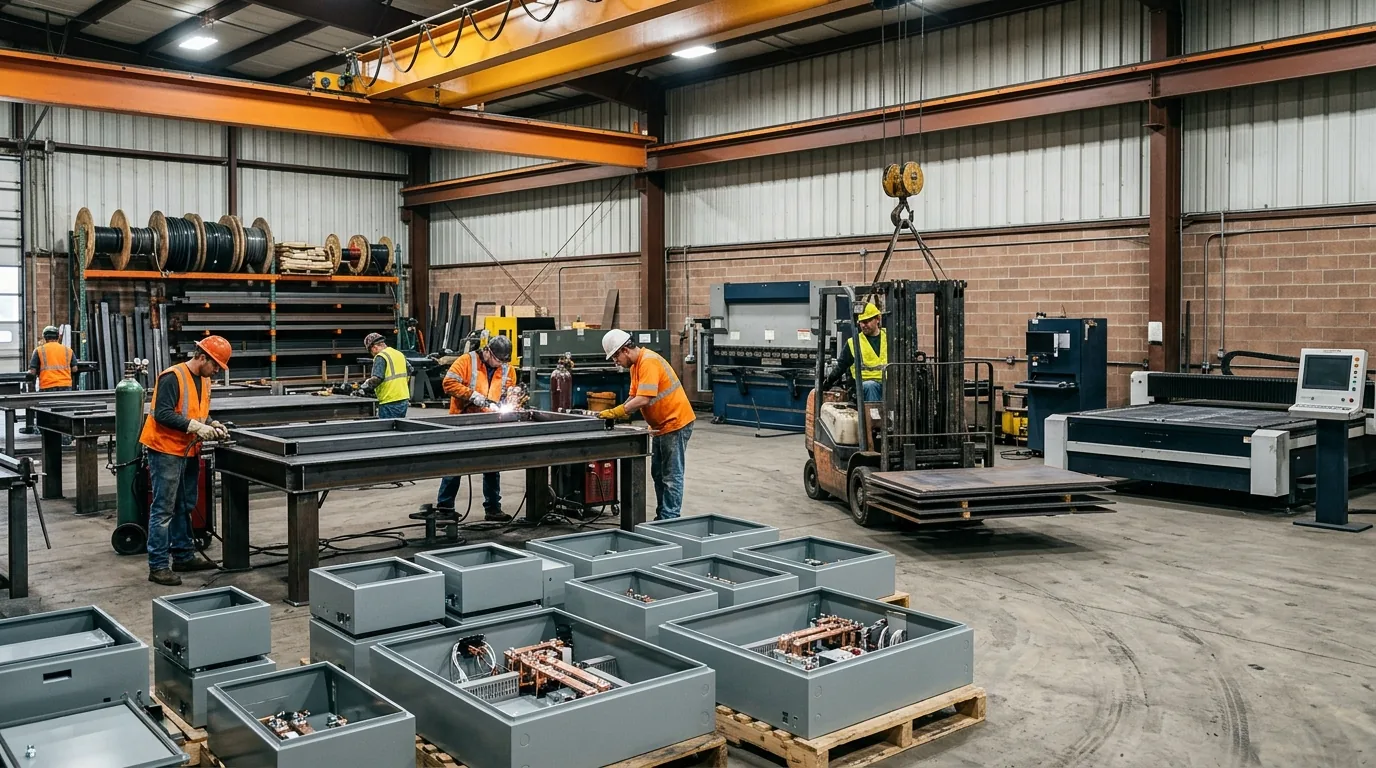
For most buyers, the bottleneck isn't a single machine — it's the handoffs between vendors and process steps. A shop that runs cutting, forming, welding, and finishing and production in-house collapses the queues that a multi-vendor chain accumulates, which is exactly the pressure datacenter timelines apply.
How EPCs protect their dates
Three moves help: lock capacity early with partners investing ahead of demand; favor single-source fabrication to cut handoffs; and confirm surge capacity for when the schedule inevitably moves. For bus duct and enclosure work on the critical path, those choices often decide the energization date.
Frequently asked questions
Why are power equipment lead times increasing?
Demand from AI and hyperscale datacenters has outrun fabrication capacity, lengthening queues for raw material, skilled labor, and finishing across the industry.
How does datacenter demand affect fabrication schedules?
It compresses timelines and fills order books, so lead time becomes a competitive variable that can determine a build's energization date.
How can EPCs reduce lead-time risk?
Lock capacity early with partners investing ahead of demand, favor single-source fabrication to cut handoffs, and confirm real surge capacity.
Does single-source fabrication shorten lead times?
Yes. Running metal and electrical work in-house removes the vendor handoffs where multi-vendor chains accumulate queues and delay.